Jasmeen Kanwal has joined us to undertake a postdoc on social evolution of digital organisms. Welcome to the group, Jasmeen!
 ag243
[New Group Member] Thomas Hitchcock
Thomas Hitchcock has joined us to pursue a PhD in social evolution theory. Welcome to the group, Thomas!
[New Paper] The purpose of adaptation
Gardner A (2017) The purpose of adaptation. Interface Focus 7, 20170005.

A central feature of Darwin’s theory of natural selection is that it explains the purpose of biological adaptation. Here, I: emphasize the scientific importance of understanding what adaptations are for, in terms of facilitating the derivation of empirically testable predictions; discuss the population genetical basis for Darwin’s theory of the purpose of adaptation, with reference to Fisher’s ‘fundamental theorem of natural selection’; and show that a deeper understanding of the purpose of adaptation is achieved in the context of social evolution, with reference to inclusive fitness and superorganisms.
[Postdoc Position] Social evolution of digital organisms

I’m advertising a two-year postdoc position on social evolution of digital organisms. The project is very flexible and will be tailored to the skills, experience and interests of the successful candidate. If you think you may be interested do get in touch!
[New Paper] Short-sighted virus evolution and a germline hypothesis for chronic viral infections
Lythgoe KA, Gardner A, Pybus OG & Grove J (in press) Short-sighted virus evolution and a germline hypothesis for chronic viral infections. Trends in Microbiology. doi: 10.1016/j.tim.2017.03.003

With extremely short generation times and high mutability, many viruses can rapidly evolve and adapt to changing environments. This ability is generally beneficial to viruses as it allows them to evade host immune responses, evolve new behaviours, and exploit ecological niches. However, natural selection typically generates adaptation in response to the immediate selection pressures that a virus experiences in its current host. Consequently, we argue that some viruses, particularly those characterised by long durations of infection and ongoing replication, may be susceptible to short-sighted evolution, whereby a virus’ adaptation to its current host will be detrimental to its onward transmission within the host population. Here we outline the concept of short-sighted viral evolution and provide examples of how it may negatively impact viral transmission among hosts. We also propose that viruses that are vulnerable to short-sighted evolution may exhibit strategies that minimise its effects. We speculate on the various mechanisms by which this may be achieved, including viral life history strategies that result in low rates of within-host evolution, or the establishment of a ‘germline’ lineage of viruses that avoids short-sighted evolution. These concepts provide a new perspective on the way in which some viruses have been able to establish and maintain global pandemics.
[New Paper] Intrafamily and intragenomic conflicts in human warfare
Micheletti AJC, Ruxton GD & Gardner A (2017) Intrafamily and intragenomic conflicts in human warfare. Proceedings of the Royal Society of London Series B — Biological Sciences 20162699.

Recent years have seen an explosion of multidisciplinary interest in ancient human warfare. Theory has emphasized a key role for kin-selected cooperation, modulated by sex-specific demography, in explaining intergroup violence. However, conflicts of interest remain a relatively underexplored factor in the evolutionary-ecological study of warfare, with little consideration given to which parties influence the decision to go to war and how their motivations may differ. We develop a mathematical model to investigate the interplay between sex-specific demography and human warfare, showing that: the ecology of warfare drives the evolution of sex-biased dispersal; sex-biased dispersal modulates intrafamily and intragenomic conflicts in relation to warfare; intragenomic conflict drives parent-of-origin-specific patterns of gene expression—i.e. ‘genomic imprinting’—in relation to warfare phenotypes; and an ecological perspective of conflicts at the levels of the gene, individual, and social group yields novel predictions as to pathologies associated with mutations and epimutations at loci underpinning human violence.
[New Group Member] Petri Rautiala
Petri Rautiala has joined us on a Newton International Fellowship, to develop theory on the epigenetical evolution of social behaviour. Welcome to the group, Petri!
[New Paper] Sexual selection modulates genetic conflicts and patterns of genomic imprinting
Faria GS, Varela SAM & Gardner A (in press) Sexual selection modulates genetic conflicts and patterns of genomic imprinting. Evolution doi: 10.1111/evo.13153
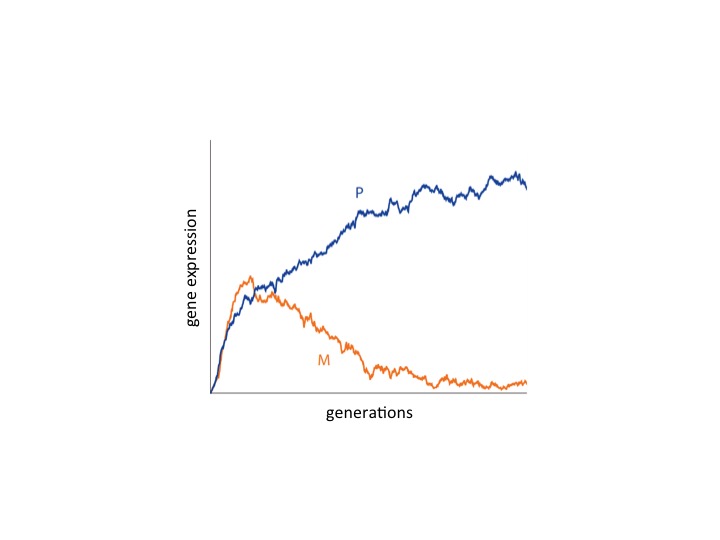
Recent years have seen a surge of interest in linking the theories of kin selection and sexual selection. In particular, there is a growing appreciation that kin selection, arising through demographic factors such as sex–biased dispersal, may modulate sexual conflicts, including in the context of male-female arms races characterized by coevolutionary cycles. However, evolutionary conflicts of interest need not only occur between individuals, but may also occur within individuals, and sex-specific demography is known to foment such intragenomic conflict in relation to social behavior. Whether and how this logic holds in the context of sexual conflict – and, in particular, in relation to coevolutionary cycles – remains obscure. We develop a kin-selection model to investigate the interests of different genes involved in sexual and intragenomic conflict, and we show that consideration of these conflicting interests yields novel predictions concerning parent–of–origin-specific patterns of gene expression and the detrimental effects of different classes of mutation and epimutation at loci underpinning sexually–selected phenotypes.
PhD Opportunity: Adaptation of genes, individuals and societies
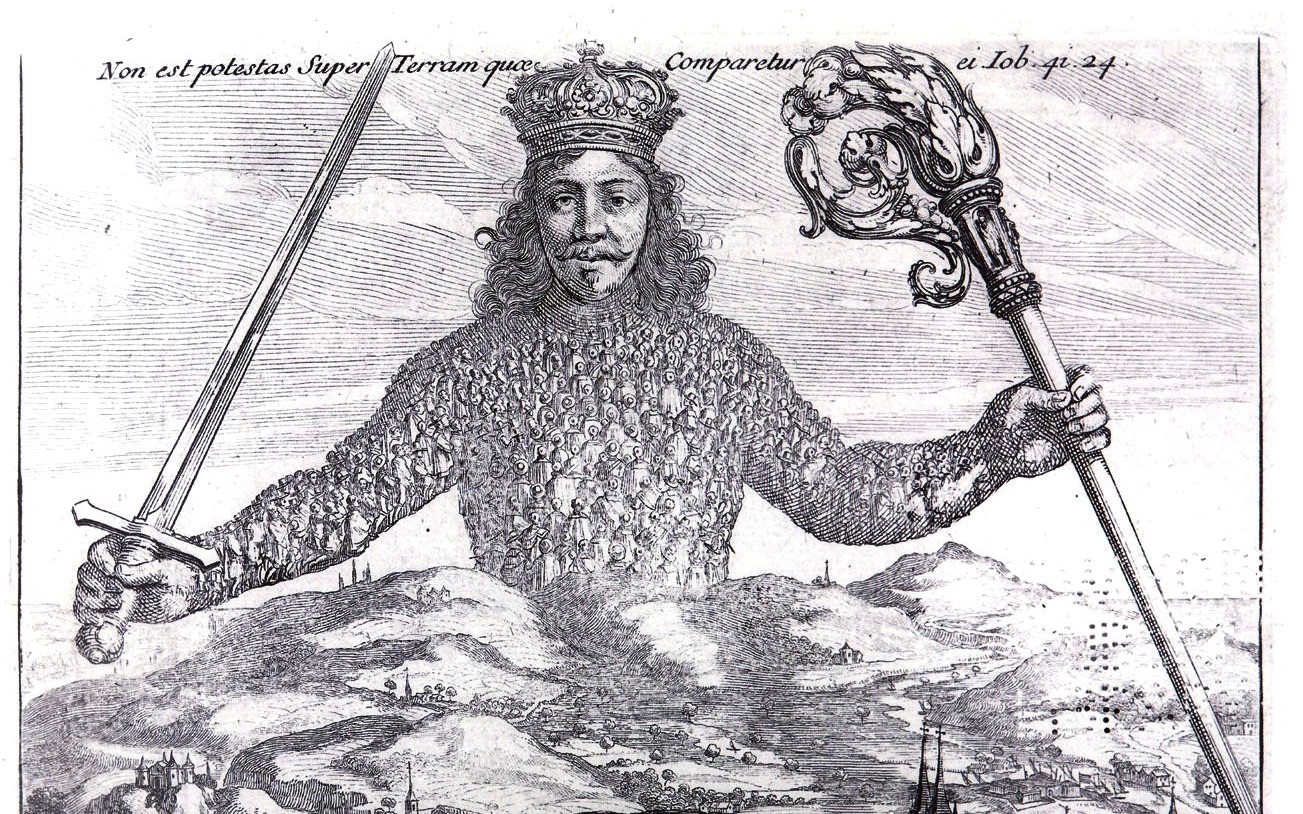
I am offering a PhD studentship on “Theory of social evolution: adaptation of genes, individuals and societies” (closing date Mon 5 Dec 2016, with a flexible start date of around Sep 2017). More details can be found here.
[New Group Members] Bekah Best & Mauricio González Forero
Two new people have joined our research group: Bekah Best will be doing her undergraduate project on genomic imprinting, and Mauricio González Forero has brought a Marie Skłodowska-Curie Fellowship to St Andrews to develop theory on brain evolution. Welcome to the group, Bekah and Mauricio!